

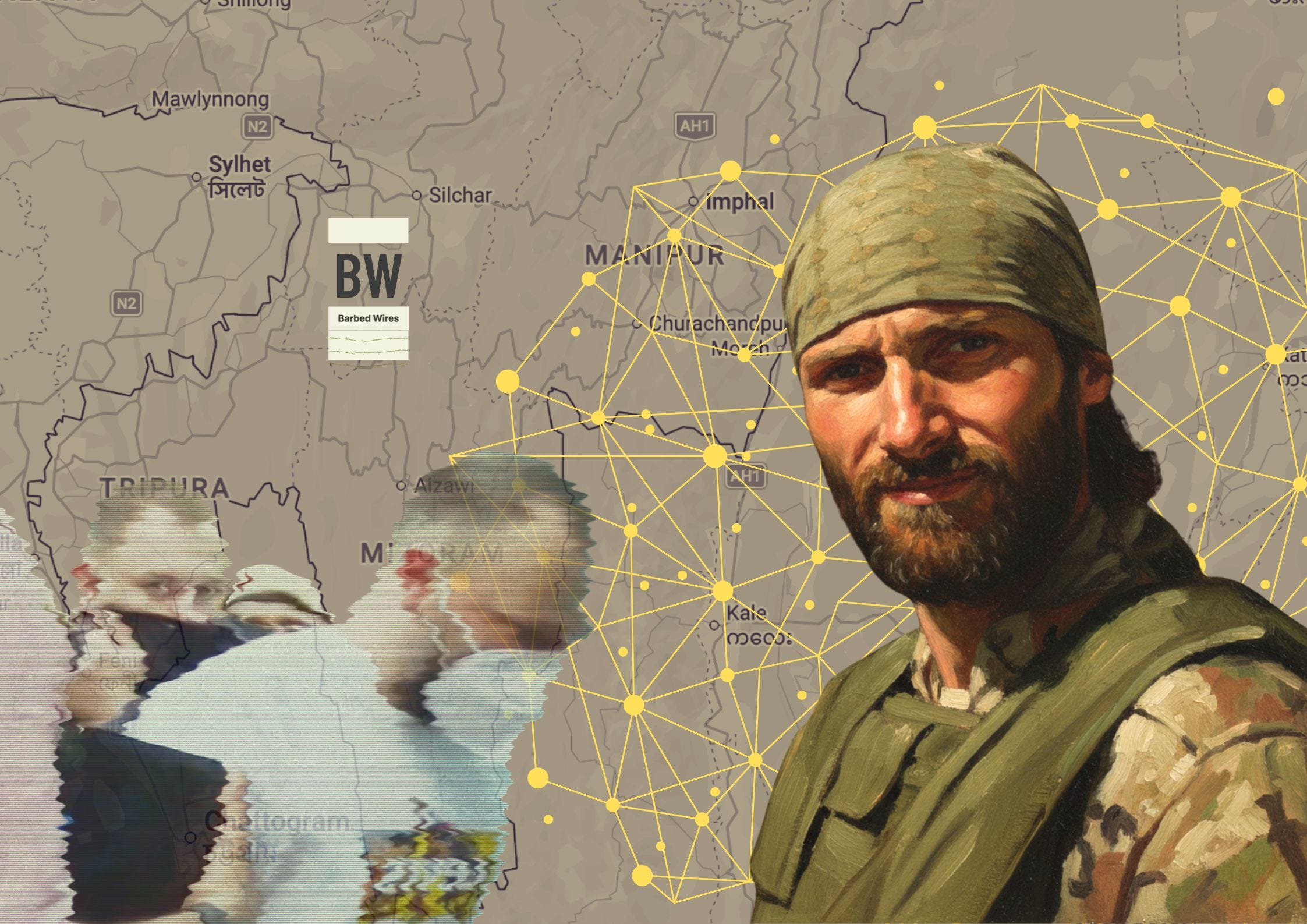
On 17 March, authorities from India’s National Investigation Agency (NIA) – the country’s premiere counterterrorism agency – arrested seven foreign nationals from different airports as they prepared to return to their countries on their way back from Myanmar.
Among them, six – Hurba Petro, Slyviak Taras, Ivan Sukmanovskyi, Stefankiv Marian, Honcharuk Maksim, and Kaminskyi Viktor – are Ukrainian nationals, while one – Matthew Aaron VanDyke – is an American citizen.
According to one media report, the NIA charged them under the Unlawful Activities Prevention Act (UAPA) 1967, informing the court that they travelled to Myanmar to impart ““pre-scheduled training” to EAG [Ethnic Armed Group] operatives in the domain of drone warfare, drone operations, and assembly and jamming technology.”
They were also charged with violating visa rules and entering Mizoram – through whose borders they entered Myanmar – without a Protected Area Permit (PAP), which is a prerequisite for foreigners seeking to travel to the Northeast Indian border state.
Part of the NIA chargesheet published by the Russian media agency, RT, reveals that they are accused of “importing huge consignments of drones from Europe to Myanmar via India for the use of EAGs” who are “known to be supporting some proscribed Indian Insurgent Groups by way of supplying weapons and other terrorist hardware and training them thus affecting national security and interest of India.”


However, it does not specify the names of the EAGs or the “Indian Insurgent Groups”. The NIA, in a short statement released on 18 March, said that it is unable to share further details on the case at this stage.
Despite the lack of specific details, the arrests and the selective leak of information by sections of the media have triggered a conspiratorial avalanche on social media. Multiple entities on X, several of them anonymous accounts dabbling in Open Source Intelligence (OSINT) analysis, began to spin stories around the event based on wild exaggerations, illogical extrapolations and straight-up incorrect representation of the ground realities in Northeast India and western Myanmar.
These were then picked up and repurposed for a larger audience by mainstream Indian news channels. Terms like “deep state” – a current favourite among large sections of the Indian right wing – are being thrown around callously.

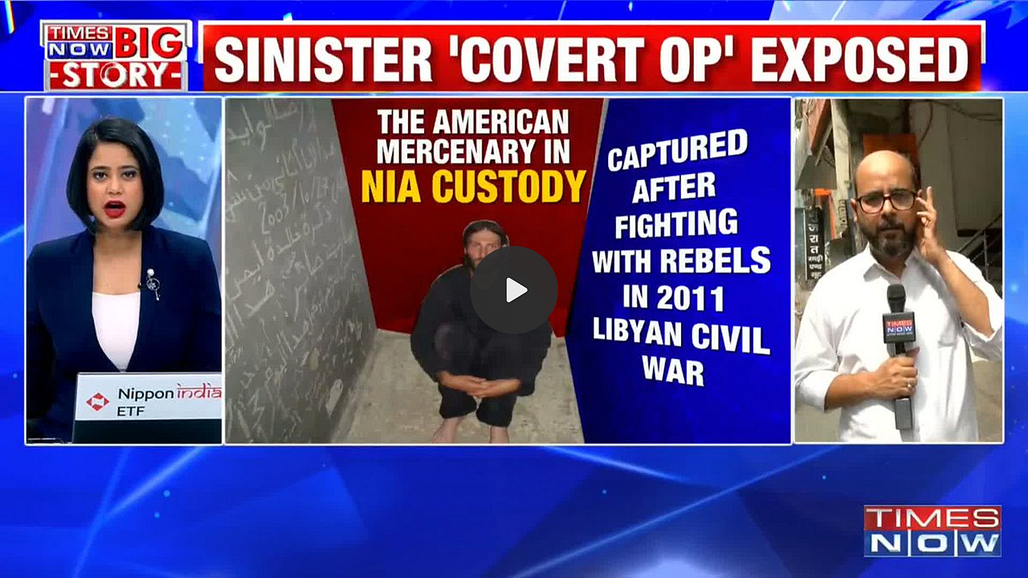
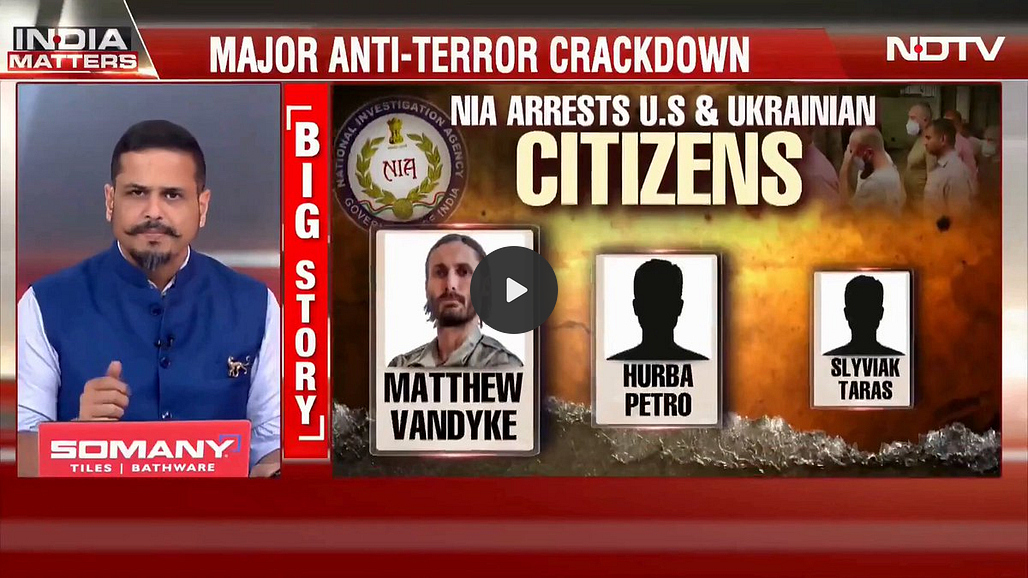
Some of the news headlines run as follows:
“NIA busts major terror plot in north-east.”
“Major Anti-India Plot Busted.”

Seven foreign nationals. A conflict-torn border. Bunch of ethnic armed groups. And a supposed CIA asset. All perfect ingredients for a modern-day, John le Carré-style spy thriller.
While the truth may often be stranger than fiction, one must still pursue it to protect the integrity of the public discourse. It is in this spirit that we attempt to look into (and through) the conspiratorial grapevine to test if the pop theories around the arrests have any merit or logic.
This piece is divided into two sections: the first part will scrutinise the popular narratives around the incident and square them against the knowns and unknowns; and the second part will map the mechanics of the conspiratorial grapevine around the incident, making some rational interpretations of what the patterns of information circulation may suggest.
PART 1: THE THEORIES
The dominant theory within the conspiratorial media grapevine is that the NIA had caught a bunch of foreign ‘mercenaries’ planning a terror attack against India.
This theory took off on jet blast when some X accounts revealed that one of the detainees, Matthew Aaron VanDyke, was likely a covert operative of US’ Central Intelligence Agency (CIA). The D-word had entered the chat – ‘Deep State.’

A second, related theory is that the arrests reveal a foreign hand in the conflict between the Meitei and Kuki-Zo ethnic communities in Manipur, a state that, like Mizoram, shares a long border with Myanmar.
This narrative is linked to a larger, conspiratorial discourse around a supposed Western-backed project to create a sovereign Christian nation (or ‘Kukiland’) out of the Chin-Kuki-inhabited areas of Northeast India, western Myanmar and northern Bangladesh’s Chittagong Hill Tracts.


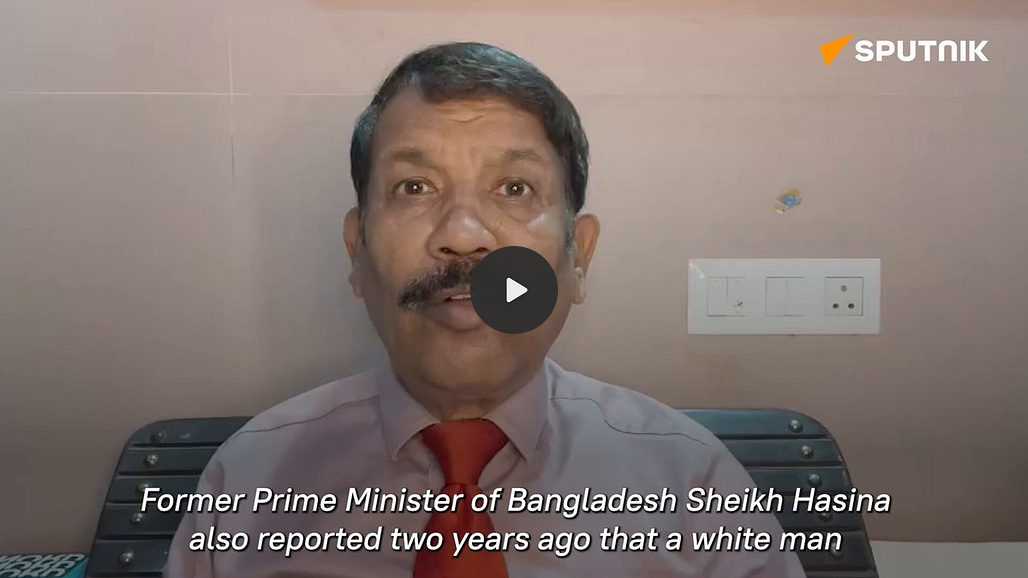
A select group of Meitei and affiliated accounts, along with some Russian media portals, are leading the charge on this, reaffirming the “foreign conspiracy” claim propounded earlier by the controversial ex-Chief Minister of Manipur, N Biren Singh.



Let’s look at these related theories one by one.
The first question is: did the foreign nationals visit areas close to the Manipur border?
Available media reports indicate that the group of seven had crossed over through the border in Mizoram – not Manipur – into Chin State.
While it is possible to enter Manipur through the northernmost border of Chin State, there is no evidence as yet to suggest that the group of seven made that treacherous crossing. This then means that they were most likely based in Chin State to support Chin resistance groups in central or northern Chin State.
The second question, then, is: are these Chin groups linked to the Manipur conflict or Indian insurgent groups?
Not really.
Chin State does not have armed groups that are at war with India. Large parts of the hilly state are today dominated and controlled by Chin National Front/Army (CNF/A), an old and influential Ethnic Armed Organisation (EAO) – which the NIA chargesheet refers to as ‘EAG’ – and other armed units, such as Chinland Defence Forces (CDF), Chin National Defence Forces (CNDF) and People’s Defence Forces (PDF).
The CNF/A leads a political coalition called ‘Chinland Council (CC)’, which controls large parts of central and northern Chin State. A second (rival) alliance of six Chin armed groups, the Chin Brotherhood (CB) controls large swathes of central and southern Chin State in collaboration with the Arakan Army (AA), an ethnic Rakhine Buddhist EAO.
The following schematic map offers a rough glimpse of the complex territorial control landscape of Chin State, bordering Mizoram:
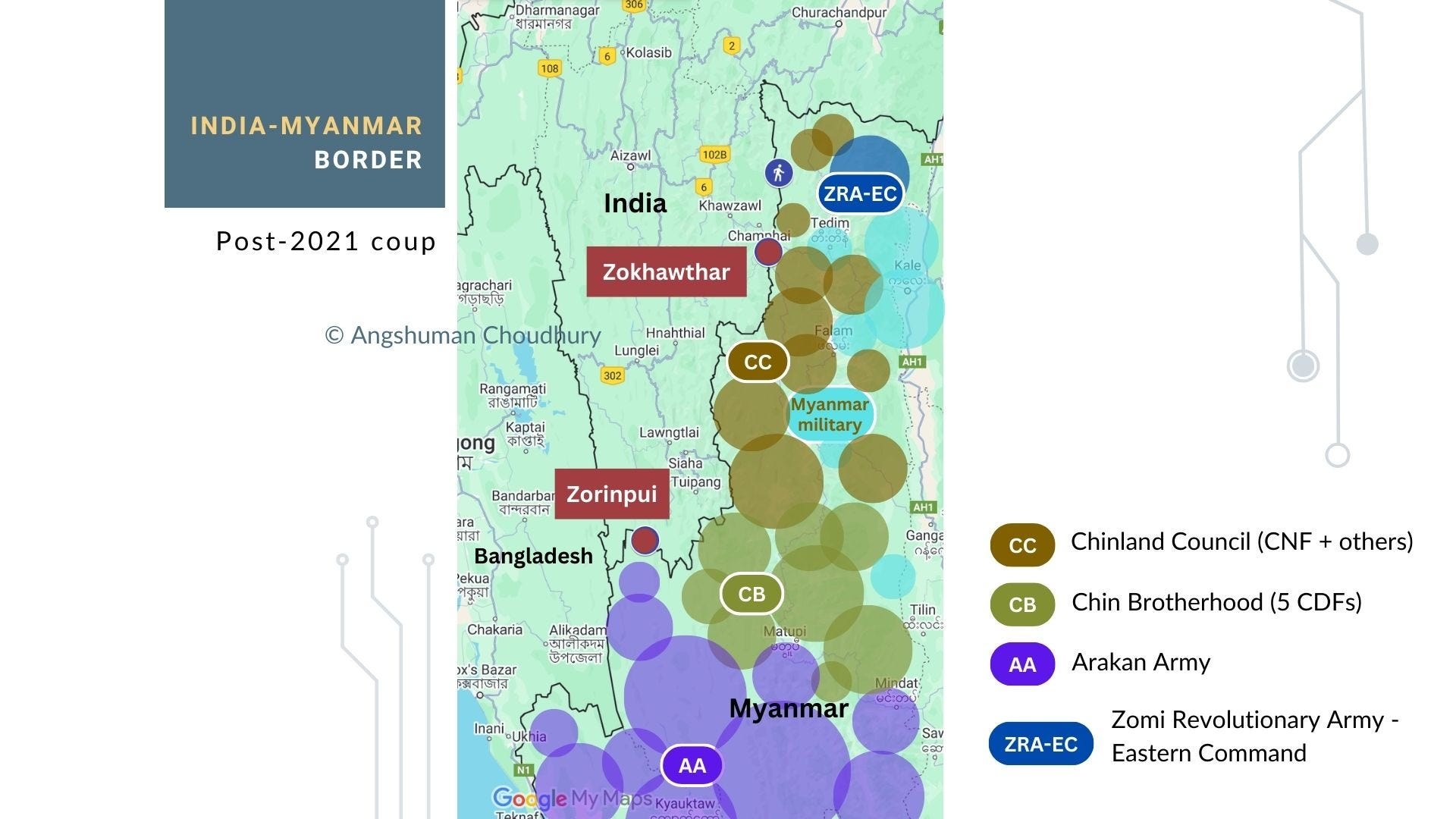
The important part of this complex story is that all of these Chin groups are together fighting their own war against the military junta in Myanmar, and do not have any hostile designs or programme of action against India.
The only minor exception in this scheme of things is the Zomi Revolutionary Army-Eastern Command (ZRA-EC), which controls parts of northern Chin State. As an affiliate of the Manipur-based ZRA, it is also the only armed actor in Chin State with direct links to Manipur and Kuki-Zo communities.
But, the ZRA-EC is not aligned with the Chin resistance and instead works with the Burmese military junta. This means we can safely rule out any collusion between ZRA-EC and anti-junta foreign ‘mercenaries’.
More broadly, two facts are relevant here.
One, the Chin and the Kuki-Zo are fighting their own battles in their own distinct geographies in Myanmar and India, respectively. A few media reports – such as this one in Swarajya, an Indian right-wing magazine – have in the past claimed direct collusion between both, but without any concrete evidence or first-hand corroboration.
Two, the Chin-Kuki-Zo ethnic ecosystem is deeply heterogeneous and internally divided. This means that Christianity is not a common unifier, and ethnic/tribal affinities continue to play a greater role in shaping their political affinities. In such a fractured context, the establishment of a single Christian nation – as claimed by several Indian right wing commentators – is far from feasible, let alone by a random group of Western ‘mercenaries’.
It is also crucial to note that no Kuki-Zo armed group, including the ZRA, is currently proscribed as a “terrorist organisation” under the UAPA in India. The updated list published on the Ministry of Home Affairs’ website only lists Meitei, Bodo, Assamese, Naga and Tripuri militant outfits – all highly unlikely collaborators of the Chin or Western mercenaries.
While small arms and drones could certainly pilfer through to areas controlled by these outfits, it would not indicate proactive or direct collusion between them and any Chin EAO, as the NIA has reportedly claimed. This makes the agency’s reported claim – that the EAGs/EAOs aided by the foreign nationals were “known to be supporting some proscribed Indian Insurgent Groups” – truly confounding.
The real Manipur link to Myanmar
There is, however, a direct link between armed groups in Myanmar and Manipur. But, it has little to do with Chin State.
A group of Meitei Valley Based Insurgent Groups (VBIGs), all currently proscribed as “terrorist organisations” by India, continue to be based in Myanmar territory along the border in Sagaing Region, which lies further north of Chin State.
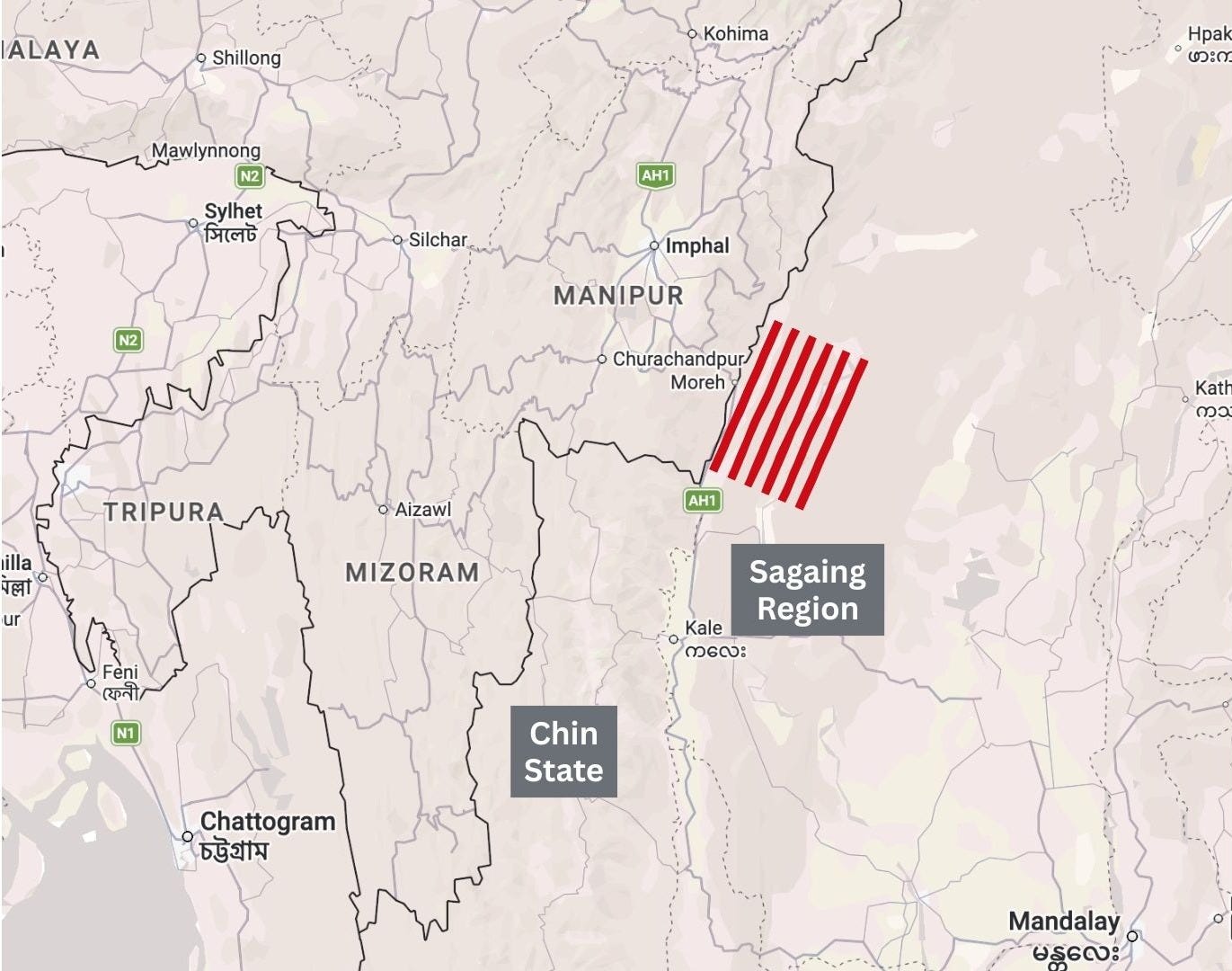
According to the Indian government’s own admission, some of these Meitei VBIGs are implicated in the Manipur conflict. Just a day after the recent arrests, the NIA filed another chargesheet against three cadres of the Manipur People’s Liberation Army (PLA) in connection with a deadly ambush on an Assam Rifles convoy in Manipur’s Bishnupur district last year. The PLA was also involved in the even deadlier 2021 Assam Rifles ambush in Manipur’s Churachandpur district.
The important detail here is that the PLA and other Meitei VBIGs have reportedly joined hands with the Burmese junta in exchange for shelter in western Myanmar.
So, if Indian war hawks and security wonks are indeed concerned about “foreign support” to anti-India militant groups, they would do better to worry about the Meitei VBIGs and their Burmese military patrons, instead of a group of combat grifters from the West.
Are Chin armed groups opposed to India?
Not only are the Chin groups benign towards India, they have, in fact, been keen to cooperate with India for mutual strategic interests.
In the 1990s, the CNF/A provided auxiliary support to Indian security forces during counterinsurgency operations against Indian insurgent groups. As Avinash Paliwal writes in his book, India’s Near East: A New History (2024), India even supplied small tranches of arms to the CNF in exchange for intelligence on Naga and Assamese insurgent groups, transforming it into “a cog in India’s counterinsurgency strategy in the Northeast.”
This shadow dynamic has since oscillated between cooperation and friction. But, in recent years, the CNF/A has sought a closer working relationship with India. In fact, in 2022, the group raided a camp of the Manipur PLA in Sagaing Region. The attack showed that the CNF/A is willing to act against and not in collusion with anti-India elements.
Subsequently, Indian authorities – both at the central and state (Mizoram) level – began to quietly expand their outreach to not just the CNF/A, but also other Chin factions to coordinate on specific issues, such as border security and counter-narcotics operations.
This was not surprising because by October 2023, the Chin resistance had seized large parts of Chin State. Today, they control nearly the entire Chin State-Mizoram border on the Myanmar side, including the official border checkpoint at Rikhawdar-Zokhawthar. So, for India, maintaining a channel of communication with them is naturally vital.
Slandering the Myanmar resistance
In the absence of specific information, the Indian mainstream and social media ecosystems, by allusively framing Chin groups as “anti-India” and “terrorist” organisations, are not just distorting the truth, but also doing a disservice to India’s own national interests by maligning a set of ethnic allies in western Myanmar.
Worse, they are parroting the distorted and politically-motivated claims of the rogue Myanmar junta, which has recently conducted a series of deadly airstrikes against civilian targets in Chin State under the garb of confronting “terrorist groups” in Chin State.
Crude labels like “terrorist” hardly apply to the Chin resistance groups who are more than just armed outfits and are running a sophisticated process of state-building and reconstruction in the liberated areas. They remain hugely popular among the Chin people and support democratic, civilian governance. They fight with discipline and rigour, much like regular armies and not militant outfits with terror-inducing strategies.
Even in wartime, the Chin resistance in Myanmar is building a new judicial system

When the military in Myanmar deposed the elected civilian government in a coup in February 2021, it triggered a countrywide armed resistance. Chin State in western Myanmar, bordering India’s Mizoram to the west, became one of the first reg…
What were the foreigners doing in Chin State?
Without specific information from the ground, it is unwise to speculate on the exact nature of the activities that the group of seven was engaged in.
But, from the available information and relevant evidence from the recent past, we can surmise that they intended to support Chin resistance groups in their separate and internal war against the Myanmar junta that has little to do with India.
And they wouldn’t be the first foreign volunteers to do so.
An Al Jazeera report from May 2024 revealed that British and American ex-servicemen were training anti-junta resistance forces in Chin State. Another alliance, known as the Anti-fascist Internationalist Front (AIF), which was reportedly raised in Chin State itself, has gathered international combat volunteers to support anti-junta resistance forces in Myanmar.
In March 2025, the Mizoram Chief Minister, Pu Lalduhoma, told the state assembly that “Ukraine war veterans had travelled to Chin State via Mizoram to train rebel outfits fighting the military junta.”
These reports are now being recirculated, including by some Russian media outlets, to confirm their conspiratorial theories about a “Western conspiracy” against India. But, they have glossed over the key aspect of these cases – that the foreign volunteers were in Chin State to train Chin forces fighting the Myanmar military regime, not India.

Resistance forces across Myanmar have been increasingly relying on drone warfare to secure an edge in the asymmetric war against the junta. According to one analysis by the Armed Conflict Location & Event Data (ACLED):
“For resistance groups lacking the jets, helicopters, paramotors, and other military equipment used in the skies by their adversaries, drones constitute their entire “air force.””
Therefore, it wouldn’t be unusual for ethnic resistance forces to seek expert guidance and training support from experienced combat drone operators – such as those from Ukraine, whose battlefields have broken new ground in modern drone warfare.
The key complication here for a neighbouring country like India is not the presence of international combat volunteers in Myanmar, but their use of India as a transit route to Myanmar.
Indeed, that a group of seven foreign individuals – regardless of what they really intended to do – were able to clear Indian immigration and enter resistance-held territory in Myanmar through a restricted border state puts India in an awkward spot before the Myanmar junta, with which it has warm relations.
Jumping the gun?
Despite the lack of specific information, the Indian media and wider commentariat seems to have – no pun intended here – jumped the gun. They argue that the mere presence of Western ‘mercenaries’ (a label that many of these combat volunteers reject) implies the existence of a larger, anti-India subversive plot. A classic case of muddling up correlation with causation.
For example, contrary to the alarmist and definitive rhetoric on social media, there is little evidence to suggest that Matthew Aaron VanDyke – the sole American citizen in the group of seven – is a “CIA agent” working for the US government to affect regime change in India.
VanDyke is a bit of an eccentric figure. For starters, the Baltimore-born guy has an unusually outward-facing and detailed public profile for a CIA operative. He has an X account with more than 580,000 followers, heads a dubious but public-facing security consulting firm called ‘Sons of Liberty International’, featured in a biopic on his stint as a rebel in Libya, and tried to raise a “Christian army” to fight the Islamic State in Iraq.
He indicated in a recent X post that he was running “covert operations” in Venezuela before the US captured Nicolas Maduro and that he was “coming for” a host of other “authoritarian regimes”, including Burma (but not India).


So, it is clear that VanDyke is some kind of a covert combat-cum-intelligence volunteer who wanted to help ethnic forces fight the Burmese junta.
But, did he have nefarious designs to destabilise India or topple the Indian government at the behest of the US government? There is zilch evidence to that effect so far, no matter what handpicked ‘defence and security experts’ on well-curated Indian media panels or alarmist articles with clickbait headlines may claim.
In fact, if we are indeed to believe everything he says on X, then he appears to be an anti-Trump liberal who is against, among other things, anti-immigrant raids by federal agents in America:

So, the only fair characterisation that one can draw from his rather odd public profile with some conviction is that he is a compulsive attention-seeker and some kind of a neoliberal combat grifter.
Despite this informational fog, how did a tsunami of reductive, exaggerated and in most parts, grossly misleading narratives take hold so quickly? Who amplified it? Was it all authentic?
PART 2: MAPPING THE CONSPIRACY GRAPEVINE
Let us know look at how the social media narrative around the arrests emerged and evolved.
On March 16, 6:36 PM IST, the news wire service IANS posted a clip about the arrests of seven foreign nationals – one American and six Ukrainians – from different places across India. A chronological search on X (formerly Twitter) where the posts received 1.9 million aggregate views suggests there were no other posts on the same prior to the IANS post.

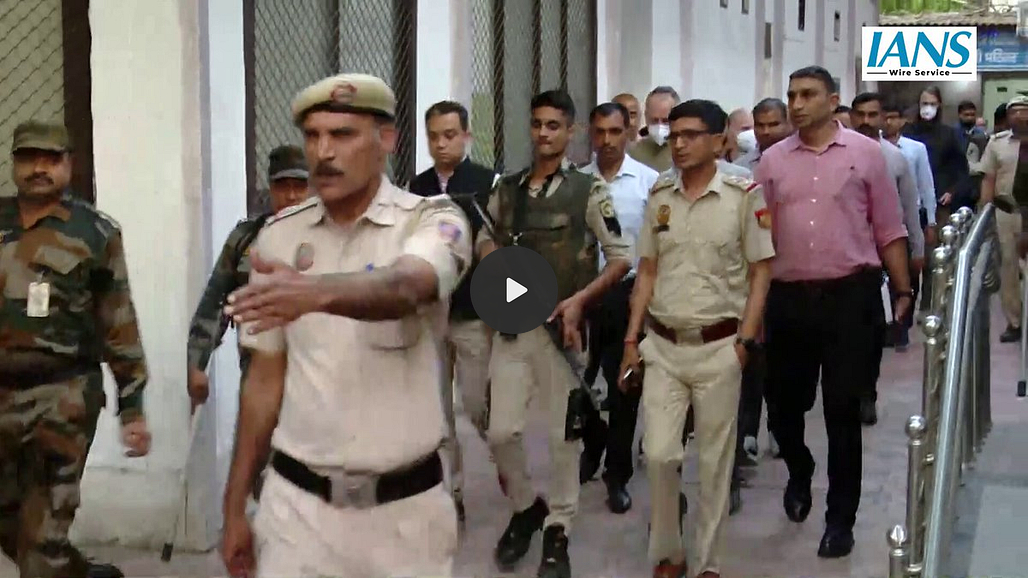
Notably, it is this IANS clip that accounts across different social media platforms, such as Instagram and Reddit, picked up for circulation. All times hereafter are IST unless stated otherwise.
In a reply to the original IANS post, on March 16, 10:46 PM, one @aaronsage replied:
“Is the last guy @Matt_VanDyke?”
Seven minutes prior to his reply to the IANS post, the user replied to an amateur Indian OSINT account that had reposted the IANS clip; the content of the reply at 10:39 PM was semantically similar:
“Is the last guy with the mask Matthew Van Dyke?”
The user went on to reply the same in two more instances, at 11:07 PM (March 16) and 12:00 AM (March 17). The latter received 31 retweets and 3 likes at the time of writing.
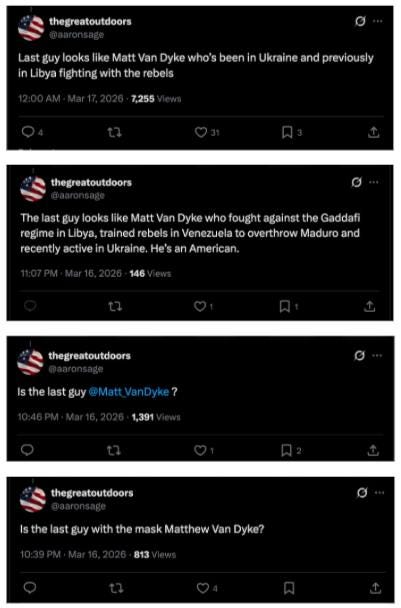
Upon further inspection, the account’s country metadata as returned by X’s API indicates it is based in the United States. The account has existed since 2024 but has made just 424 posts, and not much is publicly available on who @aaronsage actually is.
A cursory review of the account’s activity offers some indication of its interests.
In the last 24 hours, @aaronsage has reshared multiple posts concerning the resignation of Joe Kent, Director of the United States National Counterterrorism Center, who recently resigned over the US-Israeli war in Iran. Prior to that, the user had engaged with and amplified posts connecting the COVID-19 pandemic to the Epstein files, claiming the pandemic was engineered by an elite cabal.
Among the more recognisable accounts the user follows are Candace Owens, Tucker Carlson, Alex Jones, and recently famous Chinese educator on X, Jiang Xueqin. This is not a comprehensive profile of the account, but it is indicative of the content ecosystem the user inhabits: anti-establishment, anti-elite, anti-war.
The account appears to represent a splinter group within the MAGA movement that was once sympathetic to these positions, but is increasingly disillusioned with the Donald Trump administration – especially with its war on Iran, which see it as a betrayal of the “America First” promise.
Meanwhile, amongst the Indian accounts that picked this up early on, two profiles pop up in chronological search: one, @offcircuit_sec_, who posted the same on March 17 at 12:48 AM; two, @manamuntu (Shuvankar Biswas) who posted at 1:00 AM on the same day.
Both accounts comment on domestic politics and geopolitics and pose as “analysts”. @manamuntu has previously featured online for amplifying misinformation. Notably, both accounts posted the same collage of Matthew VanDyke within a gap of just two hours. This suggests neither independently identified VanDyke and were simply repurposing material already circulating in reply threads as their own analysis.
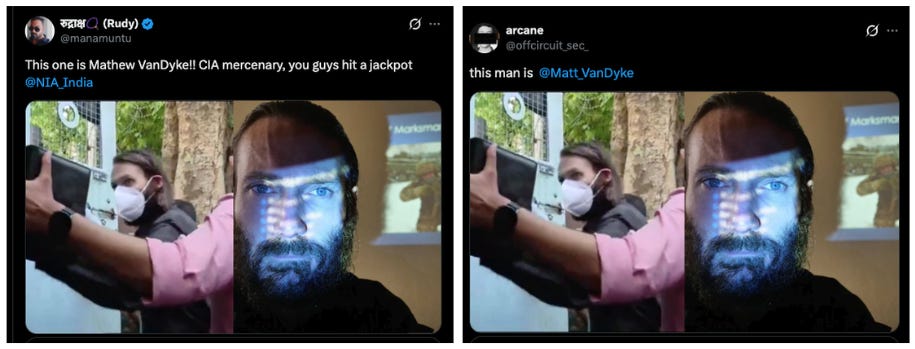
This is the overarching theme of the entire saga: amateurs, some of whom amplify things for X blue tick payouts, engaging in theories based on aggregation and passing them as investigation.
Eventually, by the afternoon of March 17, astroturf accounts (artificially-amplified pages that masquerade as grassroots accounts) such as The Hawk Eye – which presents itself as an independent OSINT investigator but whose engagement patterns have been found to be artificially amplified through pro-BJP sources – picked up and ran with it. And soon, OpIndia, another pro-BJP website accused of spreading unverified conspiracies, had an article published on it.
Whether there has been explicit coordination in sharing these posts is difficult to ascertain. However, it is clear that these pages routinely repost and cite each other, and did so in this instance too. The position that each of these pages occupies in the information sphere is complementary – one borrows generously from the other.
Coordinated Russian involvement?
Interestingly, besides IANS, Russian media outlets were some of the first news entities to circulate and amplify the arrests. Among them, RT and Sputnik – both Kremlin-funded outlets that have recently expanded their India operations – have covered the news most extensively.
Chay Bowes, an Irish media personality associated with RT, was the first pro-Russian figure to repost the IANS clip on March 16. In fact, Bowes was amongst the accounts @aaronsage engaged with, enquiring whether one of the individuals caught was Matthew VanDyke.

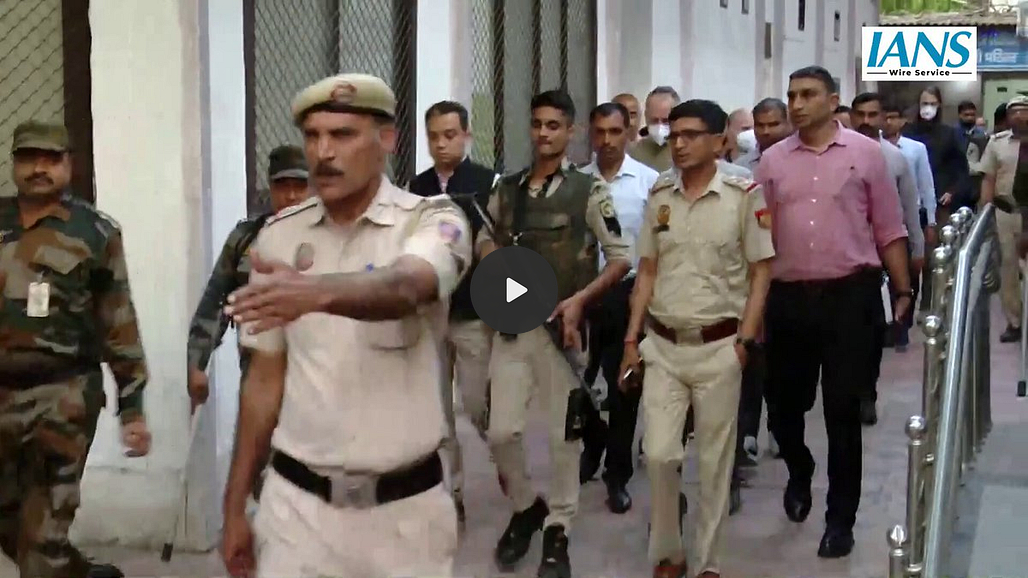
The following evening, March 17, Bowes posted an alleged photograph of Maryan Stefankiv, named as one of the detained Ukrainians.

Another figure to have picked up the report the next morning was Andrew Korybko, a blogger who has previously worked with Sputnik and the Chinese state-sponsored, CGTN. Korybko also linked his own posts as replies to multiple Indian outlets that have covered the news, and in fact continues to do so at the time of writing.
That same evening, Anatolij Sharij, a pro-Kremlin blogger of Ukrainian origin, shared additional clips of Maryan Stefankiv.


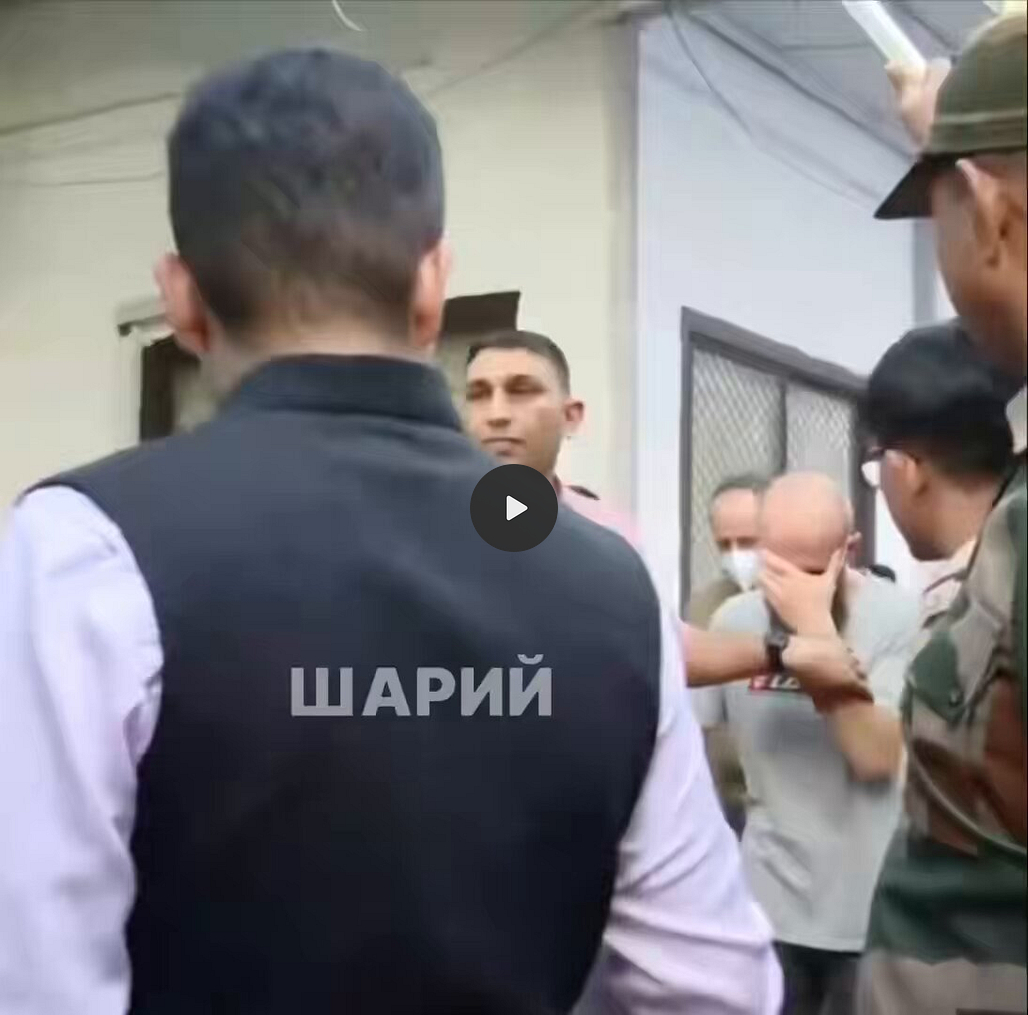

The IANS clip was also shared by the popular Russians with Attitude podcast on the evening of March 17. Most importantly, RT was the first media house to exclusively access and publish an excerpt of the NIA chargesheet that revealed the names of the seven arrested foreigners.
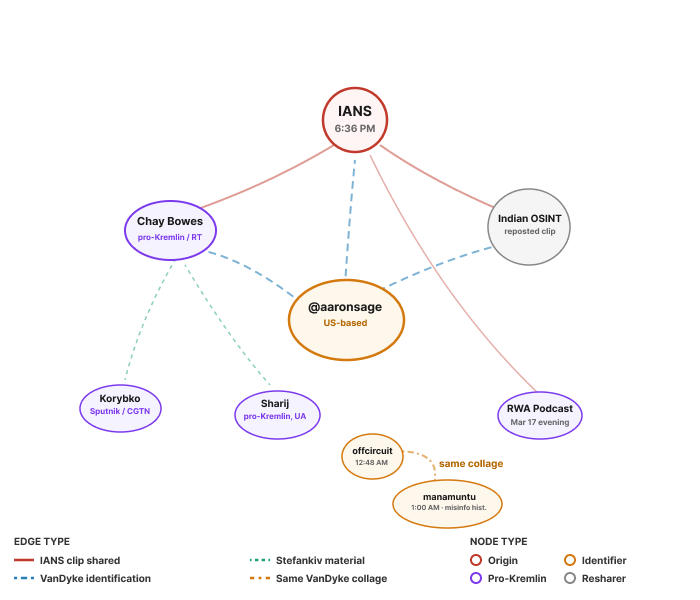
The network graph above is illustrative. @aaronsage, for instance, appears as the central node connecting two distinct spheres in this information space: pro-Kremlin bloggers and amateur Indian OSINT accounts – albeit through a single engagement with each. But that was sufficient to fuel both ecosystems.
In between, Indian news desks that carefully monitor such conversations picked up the identification and republished it verbatim, which started a parallel conversation among Indian accounts.
Once the pro-Kremlin bloggers began publishing photographs of the detained Ukrainian individuals, this material fed back into domestic outlets like OpIndia, whose editor republished the same. This is the complementary position that these pages occupy.
Prima facie, all of this suggests not only direct involvement of Moscow-aligned entities, but also some level of coordination and synchronisation with equivalent entities adjacent to the Indian government.
Beyond the media space, it could indicate direct involvement of the Russian foreign intelligence network in exposing the seven individuals. This is especially likely given the group is composed of six Ukrainians and one alleged American CIA asset.
In fact, Hindustan Times has confirmed that Moscow tipped off Indian authorities about the presence of foreign nationals in western Myanmar.
That the Russian intelligence would be involved in outing a group of American-Ukrainian foreign ‘mercenaries’ supporting anti-junta resistance forces wouldn’t be too far off given the Myanmar junta’s close strategic relationship with Moscow. In such a case, the intelligence could be easily transmitted from Moscow to Naypyidaw (or the other way round), and then onward to New Delhi.
In any case, we do not yet have specific information with concrete analytical value. This creates fertile ground for conspiracies. And there is a certain seductive lure to spinning conspiratorial yarns.
But, we must avoid them – not just for the sake of protecting the truth, but also to prevent collective misrepresentation of the struggles of ethnic minorities in Northeast India and western Myanmar who are often represented in mainstream discourses in racially-textured and politically judgmental terms.
This piece is co-authored by Kalim Ahmed, a Research Manager at Tech Global Institute where he contributes to various projects, including the Monsoon Protest Archive and Sri Lankan Civil War Archive.
Follow and subscribe to his Substack here:

good osint work. who pays this van dyke ? follow the money. maybe this was all him just drumming up some attention.
Enjoyed the deep dive. All the best 💯